
The story I’m about to tell you will seem so unbelievably outlandish that you will be absolutely convinced it’s made up.
It isn’t.
This is a real and ongoing story.
Ellie Lobel’s Story
Dr. Ellie Lobel graduated from a gifted children’s Program at University College Kensington, London with a PhD in Nuclear Physics when she was just 18 years old.
To say that she had a bright future ahead of her would be an understatement.
But in the spring of 1996, at age 27, this brilliant, fit, active woman with three kids, was bitten by a tick and contracted Lyme disease.
Back then Ellie didn’t know to look for the characteristic bull’s-eye rash after she was bitten. She thought it was just a weird spider bite. But after three months with flu-like symptoms and horrible pains that moved around the body, it was clear that this wasn’t normal.
Ellie said, “It was all I could do to get my head up off the pillow.”
Some doctors told her it was just a virus, and it would run its course. One said she had multiple sclerosis. One said Lupus. Another, Rheumatoid arthritis. Still another: Fibromyalgia. It was a full year later before she finally received an accurate diagnosis of Lyme Disease, and by then, it was far too late for standard interventions.
She tried treatment after treatment, but her condition never improved. She describes being stuck in bed or a wheelchair, not being able to think clearly, but determined to to fight with every antibiotic, pharmaceutical, and holistic treatment she could find.
“With some things I would get better for a little while, and then I would just relapse right back into this horrible Lyme nightmare. And with every relapse it got worse,” she said.
After fifteen years, she finally gave up. In 2011, she packed up everything and moved to a quiet little town in California about half way between L.A. and San Diego in order to die in a more beautiful climate.
And what happened next is truly as nightmarish as it will sound.
Ellie had only been in California for three days. She wanted to get some fresh air and feel the sun on her face and hear the birds sing instead of just laying around waiting to die.
Her caregiver helped her outside. She was standing near a broken wall and a tree when suddenly she felt something hit her in the head.
Within seconds, she was attacked by a swarm of Africanised bees.
Her caregiver ran for his life. But Ellie couldn’t run – she couldn’t even walk.
Ellie, like my wife, grew up severely allergic to bees. A simple sting could put her into anaphylaxis. In fact, she was almost killed by a SINGLE bee sting when she was just a toddler. She stopped breathing and had to be revived by defibrillation.
And now, on top of the Lyme Disease, she was being attacked by an entire swarm of bees and the only thing she could do was cover her eyes.
She remembers thinking, “Wow, this is it. I’m just going to die right here.”
She said she could feel the first five or ten or fifteen stings, but after that… All she could notice was the overwhelming buzzing, and bees hitting her all over.
When the bees finally left, her caregiver tried to take her to the hospital, but Ellie refused to go. She told him, “This is God’s way of putting me out of my misery even sooner. I’m just going to accept this.”
So she locked herself in her room and told the caregiver to “come collect the body tomorrow.”
But Ellie didn’t die. Not one day, one week, or even one month later.
After the attack, she watched the clock, waiting for anaphylaxis to set in, but it didn’t. Instead, three hours later, her body was racked with pains that continued for three days. Then, for reasons only a scientist can understand, the pain just STOPPED. And suddenly she had the beginning stages of being HEALED of Lyme Disease.
By bee venom.
More than 10 years later, you can find her on social, championing research into bee venom as a way to fight Lyme Disease.
Toxin as Medicine
The idea that the same venom toxins that kill can also heal is not a new one.
In 1938, Dr. David Macht wrote that “The close relationship of medicine and poison is actually implied by our word ‘drug.’ The Greek word pharmakon was applied to both drug and poison. The ancient Hebrews also employed the same word for both drug and poison—sa-meem—and differentiated between the two by prefixing qualifying terms implying life or death.”
There’s a poisonous little toad called the Fire-bellied toad that secretes a venom-laced sweat when provoked.
But researchers now ALSO know that certain proteins in that toxic sweat may help to heal wounds. In 2013, the Belfast School of Pharmacy was using the toxin to minimize the growth of scar tissue by speeding up the healing process.
Caffeine is a plant-based product with well-known pleasurable effects on the body. But if taken in excess, it will quickly reveal its essentially poisonous nature.
So whether we’re talking about bee venom to cure Lyme Disease, poison frog sweat to heal wounds, or a simple cuppa to help you pay attention, I suppose the bottom line is this:
What doesn’t kill you MIGHT actually make you stronger.
Your front line
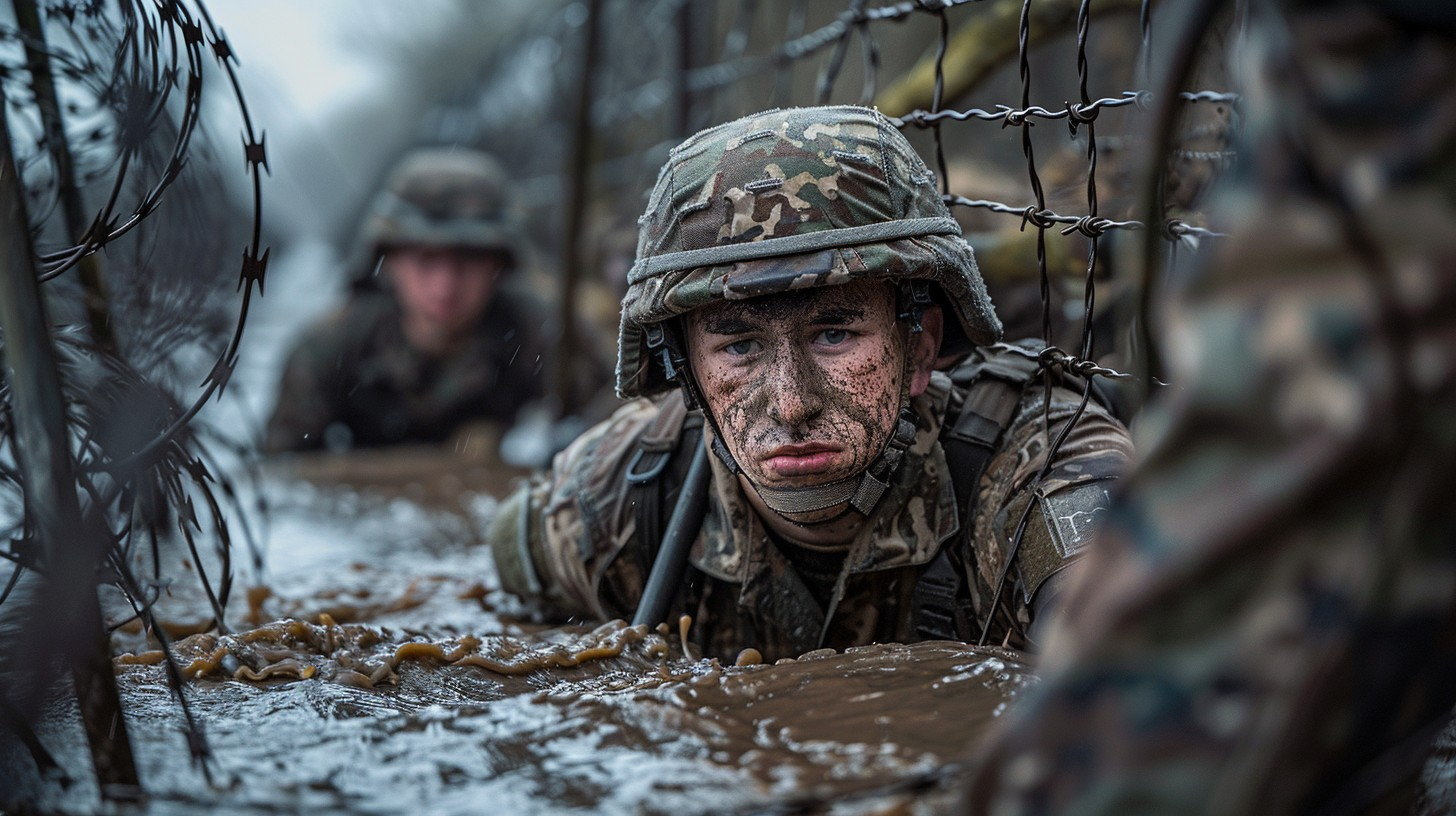
Former Navy SEAL and Rhodes scholar Eric Greitens says that soldiers know all too well what’s meant by serving on the “frontlines,” the place where you engage the enemy. But he takes the idea a lot further. He says that everyone has a place where they encounter fear, where they struggle. The battlefield, he says, isn’t the only place where people suffer hardship. Hardship hits in a million places. But he believes that it is struggle that helps us build deep reservoirs of strength. A great deal of our growth, he says, comes when we put our shoulder into what’s painful.
But he makes a really powerful observation about that. He says,
“Of course fear does not automatically lead to courage. Injury does not necessarily lead to insight. Hardship will not automatically make us better. Pain can break us or make us wiser. Suffering can destroy us or make us stronger. Fear Can cripple us, or it can make us more courageous.”
In other words, negative events and experiences can lead to negative outcomes OR positive outcomes … like a chemical compound that can either heal or kill; become medicine or poison!
No one can escape pain, fear, and suffering. Yet from pain CAN come wisdom, from fear CAN come courage, from suffering CAN come strength.
So, what is the key? What’s the difference between a negative event that becomes poison and kills and one that becomes medicine and heals?
One word: Resilience. The presence or absence of resilience makes all the difference. Resilience, Greitens says, is the virtue that enables people to move through hardship and become better.
We all have battles to fight. “If you want to win any meaningful kind of victory,” he says, “you’ll have to fight for it.”
But how? Every human around the globe wrestles with the same questions: How do you work through fear and build courage? How do you overcome defeat and rise above obstacles? How do you adapt to adversity?
Greitens says to be resilient is not easy … but it’s also not complicated. He believes we ALL can grow that virtue. But it’s not enough to WANT to be resilient or to THINK ABOUT being resilient. We have to CHOOSE to LIVE a resilient life. And one of the things he most recommends to help with that is to do the things that lead to better thinking.
As James 1:2-4 says,
“Consider it a great joy, my brothers, whenever you experience various trials, knowing that the testing of your faith produces endurance. But endurance must do its complete work, so that you may be mature and complete, lacking nothing.”